Remember flip books, where a slightly different picture on each page, when each is flipped through in fast sequence, create the illusion of an animated scene? Honda used this a few years ago to good effect for its Fit model, which was small. It made a little flip book that created a 360-degree view of the car.
This goes one step further, making a flip book for the digital age. As Creative Review notes, scenes from the Nippon motor-car rally in Japan were animated via a flipbook of images on a Facebook page. Sure, you need to click fast--and on a fast connection--to get the illusion of motion.
But it's an inventive way to make old media new again.
Wednesday, November 14, 2012
Wednesday, September 26, 2012
Virtual is Real
How many times have we heard about differences between virtual and real space, the irrelevance of one or the other, and difficulties in connections between virtual and real?
The forefront of thinking seems increasingly to be that the very distinction virtual/real itself is irrelevant.
What's replacing it? Ways of mapping the real in the virtual, and the virtual in the real to the degree that the distinction just plain doesn't matter.
A case in point: CNNCTD+ and its Sound Graffiti project, most recently used in conjunction with the promotion of Bob Dylan's new album "Tempest."
As DJ Manero, the the head of the creative agency notes in a recent blog interview, the system maps and releases specific music only when located at specific geographic points--such as in the case of Dylan key places from his past.

The forefront of thinking seems increasingly to be that the very distinction virtual/real itself is irrelevant.
What's replacing it? Ways of mapping the real in the virtual, and the virtual in the real to the degree that the distinction just plain doesn't matter.
A case in point: CNNCTD+ and its Sound Graffiti project, most recently used in conjunction with the promotion of Bob Dylan's new album "Tempest."
As DJ Manero, the the head of the creative agency notes in a recent blog interview, the system maps and releases specific music only when located at specific geographic points--such as in the case of Dylan key places from his past.
Friday, August 31, 2012
Wearable devices
So much for portable handheld devices. What if you could wear your screen?
That's the thinking behind the tshirtOS, a cotton shirt outfitted with an LED screen, camera, and tiny processors to let it talk to your smartphone and to the internet.
Okay, so the screen is not quite retina quality.
But it opens up new ways of thinking about mobility and interconnectedness. What if anything might it mean for advertising and promotion? Stay tuned.
Okay, so the screen is not quite retina quality.
But it opens up new ways of thinking about mobility and interconnectedness. What if anything might it mean for advertising and promotion? Stay tuned.
Wednesday, July 18, 2012
Creative Top 50
Want to see an industry run-down of the top-50 "techies" of the advertising world?
Check out a nice feature appears in the latest issue of "Creativity," the email newsletter from Crain Communications.
It not only lists lots of folks. It also provides links to a more detailed description of recent work, plus in many cases some of their own thoughts on what they do.
Great source for seeing the thinking behind new media.
Check out a nice feature appears in the latest issue of "Creativity," the email newsletter from Crain Communications.
It not only lists lots of folks. It also provides links to a more detailed description of recent work, plus in many cases some of their own thoughts on what they do.
Great source for seeing the thinking behind new media.
Monday, July 16, 2012
What's photography?
While lots of writing about new technologies portrays their use as revolutionary and new, here's an example of a new use retroactively affecting an existing activity. In this case, photography.
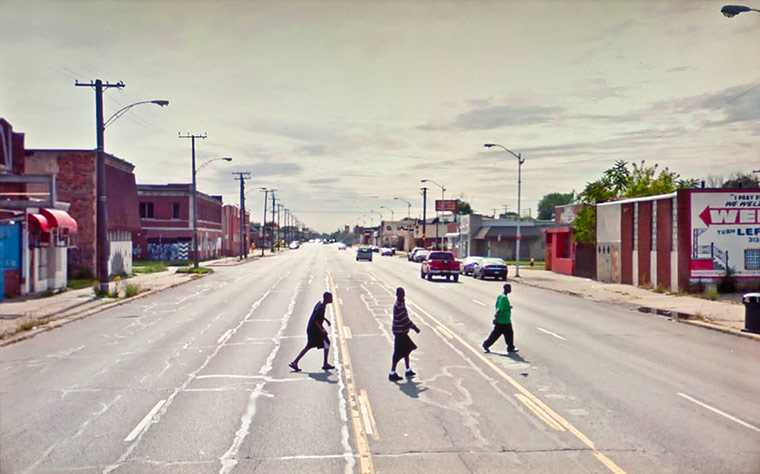
The Guardian recently ran a piece on how documentary photograph-minded users of Google Street View troll it for unintentionally resonant images of street life. They then display these found images as documentary photography.
Whatever you think of photographers (can they just sit and search for images?), this is a startling new use of an existing (new) technology, and right up the alley of really new media.
The Guardian recently ran a piece on how documentary photograph-minded users of Google Street View troll it for unintentionally resonant images of street life. They then display these found images as documentary photography.
Whatever you think of photographers (can they just sit and search for images?), this is a startling new use of an existing (new) technology, and right up the alley of really new media.
Wednesday, June 20, 2012
Coca-Cola? Here?
But, heck yeah, I'm still clean--the promotion actually isn't by Coke, but by a re-imagining/ updating of its (in)famous "Hilltop" ad from decades ago.
Some pretty cool really-new-media thinking. Its some of the best concepting I've seen since my all-time favorite (and still living in concept only) "Durex Baby."
Stretching QR Codes
Leave it to artists such as Yiyung Luto start to imagine new uses, and thus to bring the technology into the realm of really new media.
Integrating a QR code into each finished illustration takes users to a video stop-action animation of the making of that illustration.
See more at her website.
Subscribe to:
Posts (Atom)